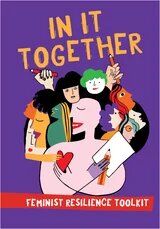
The Feminist Resilience Toolkit brings together strategies from feminist activists across five continents. It shares practical exercises on well-being, digital security, leadership, and funding. Case studies show how movements resist repression and build collective strength.
Feminism faces prejudice in the Czech Republic. However, feminist foreign policy means more than just gender equality: principles like participation or accountability are already partly a reality here. How to move forward was explored through focus groups by researchers from the Institute of International Relations, Ondřej Horký-Hlucháň and Míla O’Sullivan, in collaboration with the Heinrich-Böll-Stiftung Prague.
This brief contains recommendations for practitioners of the international development sector to shift the status quo of development and move towards feminist global collaboration.
Feminist foreign policy is emerging as a new paradigm in international relations. The concept raises expectations of a more peaceful and just foreign policy, but its theoretical dimension and practical implementation are often not clearly defined. This toolkit tries to close this gap and clarify key terms of feminist foreign policy, as well as outline the practical application of the feminist approach to international diplomacy, to security, environmental, development, trade and migration policy.